![]() |
|
|
Sourcebook Teaching Tips
The Most Important Sourcebook Element for Students’
Spelling Success
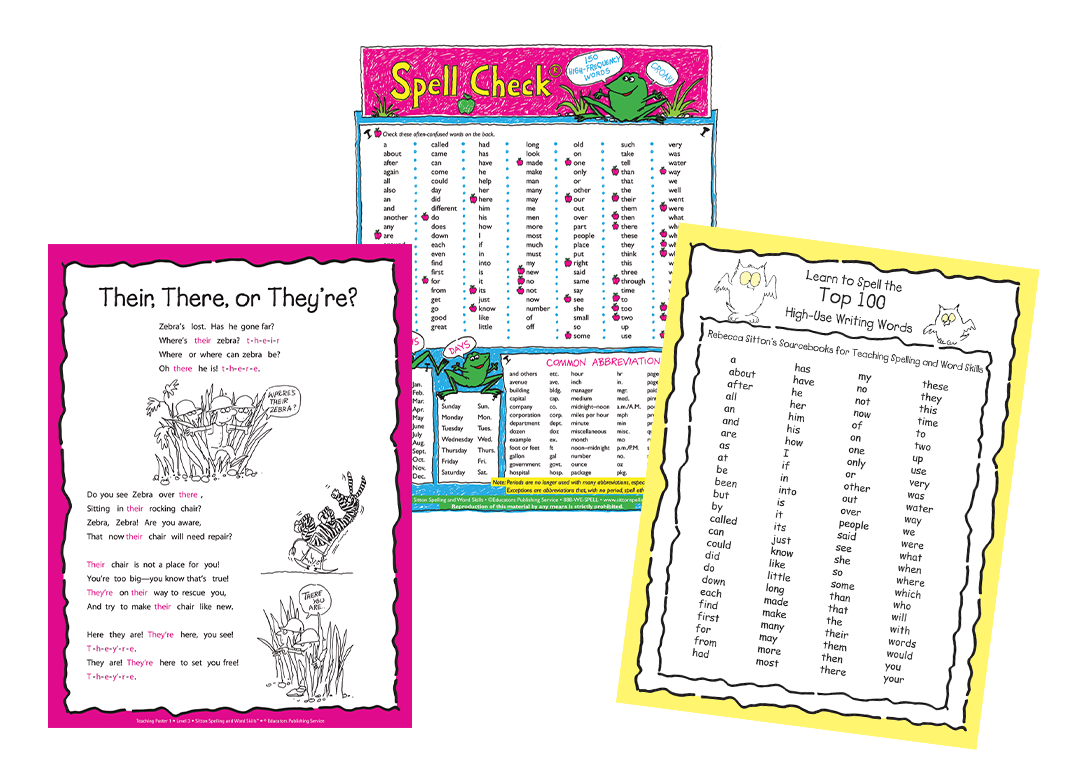
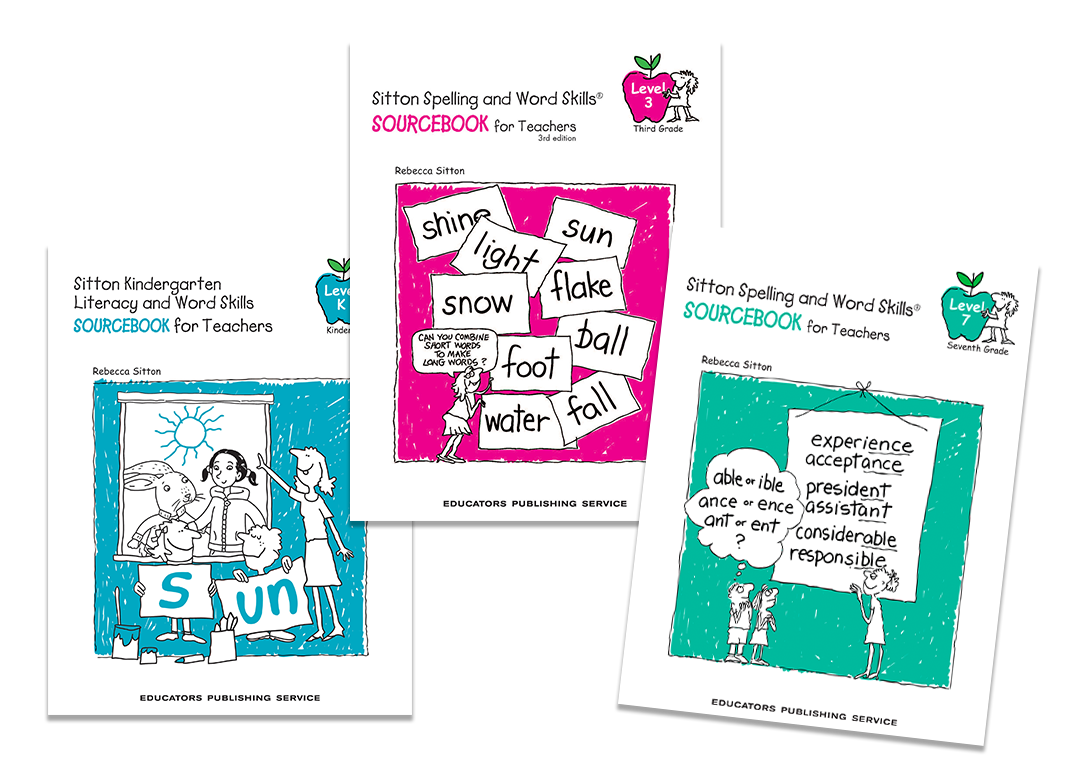
All teachers want their students to learn to spell. Yet, teachers lament they are obstructed by forces they cannot control, such as funding levels, socioeconomic factors, low achievement scores, federal guidelines, and too little time. What does research confirm regarding the most important factor in student learning? The answer may be surprising. It is not any one of these uncontrollable forces that makes the difference. Research proves that the number one factor in student achievement is instruction (Michael J. Schmoker, Results Now: How We Can Achieve Unprecedented Improvements in Teaching and Learning, Association for Curriculum and Supervision, 2006.) What gets taught gets learned. This means teachers—you—control your students’ achievement through instruction. Basic to students’ spelling achievement is learning to spell and use English words literately in everyday writing. To reach this goal, the words used most often in writing must be central to teachers’ instruction. The Sourcebook provides the instructional resource for guiding students to discover essential strategies to master the1200 highest-frequency writing words, the program’s Core Words. The Core Words occur in the program in order of frequency of use. All previously occurring Core Words automatically become a part of each subsequent grade level so that these essential words are cumulative and systematically recycled for mastery. Why are the words recycled? It is essential to students’ spelling achievement that students master the Core Words long term, not just for a one-time test as in customary programs. Long-term spelling mastery, regardless of the quality of the instruction, rarely takes place instantly. Revisiting the Core Words over time and guiding students to use the strategies to learn them is key to long-term mastery. Teachers can rely on the Sourcebook’s recycling program design to provide the instructional tool to make student mastery of the essential Core Words a reality. What is the best advice to ensure this reality? The best advice is to keep the high-use writing Core Words central to teachers’ instruction. There is the temptation to add more and harder words to the Core Words list and the tests. Some teachers worry about narrowing the curriculum to a focus on just these 1200 words; however, the highest-scoring countries in literacy attempt to teach a third as much as is found in an American curriculum on the same topic (Schmoker, 2006). Teachers who lengthen students’ word lists do not strengthen their spelling program. The result is “covering” many words, but mastering few words long term. The goal of learning to spell and use English words literately in everyday writing fails because instruction diverges from the goal. The Core Words must always be central to teachers’ instruction to ensure that the goal is met. Students encounter hundreds of additional words, often difficult-to-spell words, through the Sourcebook word-skill activities, but to ensure mastery of the Core Words the Sourcebook’s formative assessment component remains focused on the high-use writing words. The program assessment identifies the Core Words students have not yet learned and targets the words for instruction using a variety of research-based strategies. This focus must not be obstructed if the goal is to be achieved because the most important Sourcebook element for students’ spelling success is to keep the Core Words central to teachers’ instruction. Improved classroom instruction is the prime factor to produce student achievement gains (A. Odden and M. Wallace, Education Week, August 6, 2003). To improve teachers’ Sourcebook instruction, see What’s Current?—The Prime Factor to Produce Student Achievement Gains in this Appleseed issue. |
|
|
Call us toll free 888-WE-SPELL (888-937-7355) or visit us at www.epsbooks.com/sitton
Published three times per year by Educators Publishing Service |
|